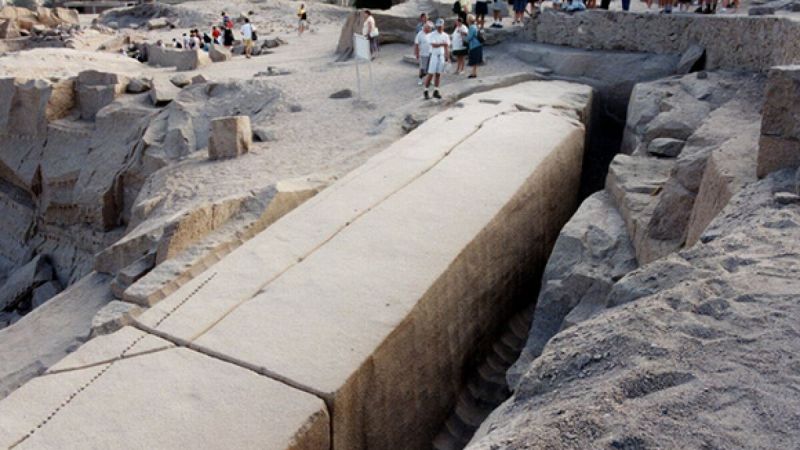
The Unfinished Obelisk of Aswan stands as one of the most interesting yet less recognized sites in Egypt. This enormous structure located within the ancient granite quarries of Aswan provides an uncommon chance to observe the architectural skills used by ancient Egyptians.
This obelisk remains at its original quarry site because it has not been finished and moved to temples like other obelisks. The exceptional Aswan attraction needs to appear on your travel schedule because it serves as a main point for both your Aswan day tours and your Egypt travel package planning.
History and Importance of the Unfinished Obelisk
Birth and Purpose
The Unfinished Obelisk dates back to the 18th Dynasty and was commissioned by Queen Hatshepsut (1479–1458 BCE), one of the most powerful female pharaohs in ancient Egyptian history.
The planned dimensions for the largest obelisk in Egypt required it to reach a height of 41 meters (135 feet) and weigh about 1,200 tons. The monument at the Temple of Amun-Ra in Karnak (ancient Thebes) was constructed to show royal authority and dedication to the sun god Ra.
Obelisks represented rays of sunlight and were often placed at temple entrances to honor deities and commemorate royal achievements. Hatshepsut used this ambitious project as a means to establish permanent recognition for herself through monumental construction work.
The Construction Process
The obelisk was carved directly from the granite bedrock in the Aswan quarry. The ancient workers used these tools
The workers employed copper chisels
The workers used dolerite stones for pounding
The workers utilized wooden wedges, which they soaked in water to create expansion that would split the stone. The Aswan quarry served as Egypt's primary granite source, which supplied material for its most famous monuments. The site becomes remarkable because visitors can still observe the tool marks that ancient stone workers used to carve the rock.
The site offers authentic learning experiences about ancient engineering, which travelers can explore through various Aswan day tours.
What caused the work to stop without reaching its final stage?
The granite block developed a major crack during the carving work. The building defect made the obelisk dangerous to move and impossible to construct. The work stopped because the project reached the point of total abandonment.
Some historians suggest that political changes after Hatshepsut's reign created an impact on project termination because her successor redirected his priorities and resources.
Why the Unfinished Obelisk Is a Top Aswan Attraction
1. A Rare Insight into Ancient Engineering
The Unfinished Obelisk stands as the primary tourist attraction in Aswan City. The obelisk shows people the ancient Egyptian method of stone extraction and shaping and stone block preparation before transportation. This feature attracts visitors who travel to Egypt to explore cultural sites and historical locations.
2. An Unfinished Masterpiece
The Unfinished Obelisk becomes more interesting through its unfinished state. The crack in the rock shows how ancient people worked to complete their monumental projects.
The site offers a special viewing experience that visitors cannot find at other Egyptian sites.
3. Unique Location in the Quarry
Egyptian temples received most obelisks, which traveled throughout the country and to foreign locations. The obelisk remains at its original location, which builders used to create it. The obelisk creates an environment that enables visitors to understand the massive size and effort that ancient builders used to construct the structure.
The site provides visitors with additional educational content that surpasses standard pyramid and temple experiences.
4. Connection to Queen Hatshepsut’s Legacy
The Unfinished Obelisk exists as proof of Queen Hatshepsut's dual achievements of her all-encompassing architectural ambitions. Her architectural work extended throughout all of Egypt through her execution of many monumental building projects. The site demonstrates her governing period while showing her need to boost Egypt's religious and political strength.
5. Understanding the Scale of Ancient Monuments
The project would have created an obelisk that ranked among the tallest structures of its time period. The large size of the structure allows visitors to experience how ancient Egyptian builders accomplished their monumental construction work.
Aswan day tours frequently feature this experience as their most significant event.
6. Educational and Cultural Value
The Unfinished Obelisk serves as a monument that functions as a classroom space that exists outdoors. The site exhibits ancient technology together with craftsmanship and architectural planning in a way that few other locations can show to visitors.
The location provides history enthusiasts, archaeologists, and curious travelers with an exceptional experience to connect with the innovative achievements of ancient Egyptians.
More than just another abandoned monument, the Unfinished Obelisk of Aswan itself speaks of ambition, perfectionism, and architectural triumphs. When one stands respectfully by this massive structure, one sees the paramount moment in history where creativity, engineering, and royal vision climbed high mountains and wrestled with their demons.
Words will mean nothing to you until you really see with your eyes how the Egyptian wonders came to be. Save this exceptional attraction of Aswan simply for your journey. Say, when exploring the beautiful day tour itineraries in Aswan or all-inclusive Egypt vacation packages.
Enter the quarry. Touch with your head against those histories. Let the unfinished tale be pitched through ancient Egypt.