.jpg)


Explore the fascinating legacy of King Tutankhamun, the Boy King of Ancient Egypt, and uncover the history of his reign, the discovery of his tomb, and the priceless treasures of the ancient world.
The Egyptian calendar was a solar calendar used in ancient Egypt consisting of 365 days divided into 12 months and 3 seasons. It was based on the annual flooding of the Nile and the rising of the star Sirius.
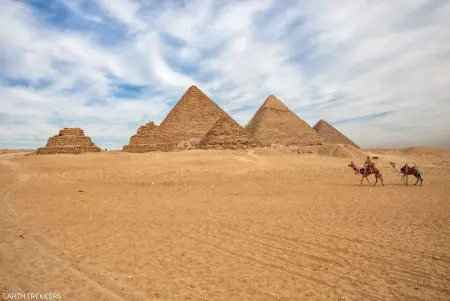
The ancient Egyptian civilization creates a mental image that includes its pyramids its golden pharaohs and the Nile River which has continuously flowed since ancient times. The ancient Egyptian calendar system represents one of the strongest enduring historical legacies which developed through their monuments and their religious beliefs.
The ancient Egyptians developed this exceptional timekeeping system which controlled their agricultural activities and religious practices and astronomical studies and everyday functions and its effects continue to impact contemporary society.
The ancient Egyptian calendar served as a scientific achievement that extended its function beyond mere day counting. The system established societal organization through its ability to forecast Nile flood patterns and its function in organizing religious festivals. The Egyptian calendar system enables travelers who explore Egypt tours to gain a better understanding of the country’s historical achievements through its role in their current tour experiences.
Let’s explore how the Egyptian calendar was born, how it worked, and why its legacy still matters.
What is the Egyptian calendar?
The Egyptian calendar is one of the oldest known calendar systems in history, created in ancient times to organize agricultural cycles, religious festivals, and daily life along the Nile. It was based on a 365-day year divided into 12 months of 30 days, plus 5 extra days added at the end of the year.
This system, long ago, was mainly oriented to the management of agricultural seasons, particularly the annual flooding of the Nile, The humankind had continued to be an essential lifestyle development factor since its inception, since it could not have been cultivated on the arid Nile banks without the inundation.
The calendar also seems to have inspired somewhat later calendar systems in use in the Mediterranean world.
What was the Egyptian calendar based on?
The ancient Egyptians used celestial observations to measure time before modern timekeeping devices developed.
They discovered around 3000 BCE that Sirius (Sopdet) appeared in the sky just before sunrise every year whichoccurred right before the Nile river started to flood.
The ancient Egyptian calendar system began its annual cycle from this astronomical event. The Nile river flooding brought essential life resources because it enriched soil and provided water for survival. The Egyptian calendar system became one of the first human solar calendars because it united astronomical knowledge with farming practices.
The Egyptian calendar system operated on 365 days which represented exceptional advancement for that historical period. Egyptian calendars based their system on solar time which created a scientific advancement that set Egypt apart from other civilizations which used lunar time systems.
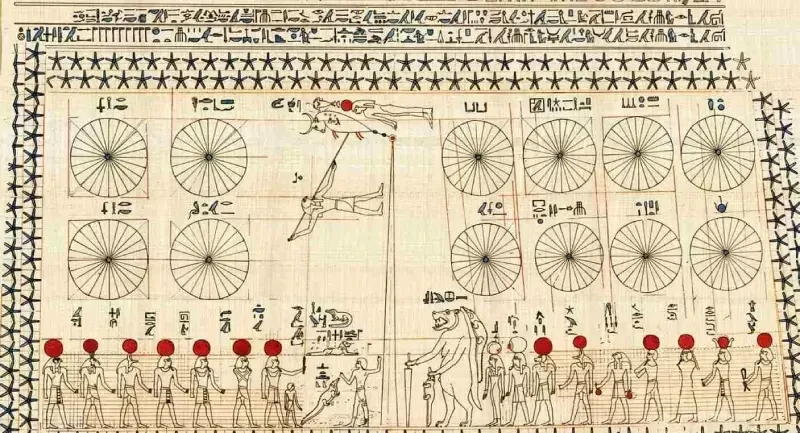
How was the Egyptian calendar structured?
The ancient Egyptian calendar divided the year into three main seasons:
Akhet (Inundation) – The flooding season
Peret (Emergence) – Planting and growing season
Shemu (Harvest) – Harvest season
Every season contained four months that each had 30 days which amounted to 360 days total. The system then added five additional days which people referred to as "epagomenal days" to honor the birth anniversaries of their major deities Osiris and Isis and Seth and Nephthys and Horus.
The Egyptian calendar system did not recognize leap years because it failed to incorporate the extra quarter day during its early development. The system brought about gradual seasonal changes which continued for several centuries. The Egyptian calendar system maintained its precise structure throughout a time period which lasted for thousands of years.
Egypt travel packages today provide guided tours which demonstrate how temple rituals and agricultural cycles used this specific calendar system for their operations.
The Calendar’s Role in Religion and Society
Time held sacred status during ancient Egyptian civilization. The ancient Egyptian calendar determined:
Religious festivals
Coronations of pharaohs
Temple ceremonies
Agricultural taxation
Priests served as the official timekeepers who maintained time. They used shadow clocks, water clocks, and star observations to maintain accuracy. The Egyptian calendar created the schedule for all major occasions which included wheat harvests and religious celebrations.
The Egyptian calendar served as a representation of cosmic order which Egyptians referred to as "Ma'at." Keeping time correctly meant maintaining harmony between humans and gods.
The calendar system of ancient Egypt stands as one of the essential elements that contribute to organized civilization according to modern historians.
The Lasting Legacy of the Egyptian Calendar
The ancient Egyptian calendar continues to impact modern society throughout its post-pharaonic period. The Egyptian calendar produced:
The Coptic calendar
The Roman calendar reforms
The modern Gregorian calendar contains elements which developed from previous calendar systems.
Julius Caesar reformed the Roman calendar (Julian calendar) with strong influence from Egyptian astronomy and Alexandrian scholars.
This reform led to the Julian calendar a major step toward the calendar system we use today.
The Egyptian calendar provided evidence that scientific observation could exist together with cultural traditions.
The calendar serves as a demonstration of ancient Egyptian intellectual achievements.
For travelers exploring temples in Luxor or walking beneath the pyramids, understanding the ancient Egyptian calendar adds a new dimension to the journey.
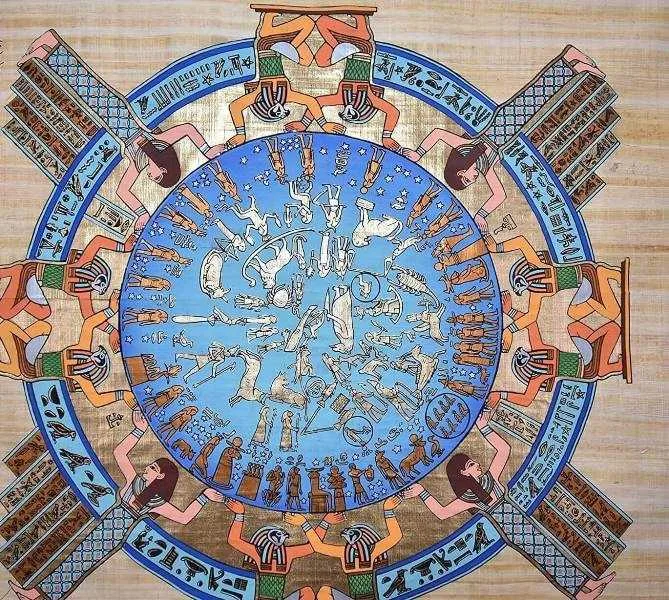
How many days were in the Egyptian calendar?
The Ancient Egyptian calendar consisted of a solar system with 365 days, 12 months of 30 days, and an additional five festival days at the year's end. At times, a day was added every four years to better align this calendar with the solar year certainly an admirable notion that tends to impress those sightseeing in Egypt or enjoying a Nile cruise.
A lunar religious calendar also operated, following cycles of about 29½ days and governing agricultural and stellar ceremonies.
The Profound Legacy Of The Egyptian Calendar
The Egyptian calendar had its influence throughout the world. It laid the very foundation of the Julian calendar, later accepted throughout Europe, and its advanced astronomy was the original study applied in early astrology, considered by Greeks and Romans.
The ancient Egyptian calendar functioned as more than a day-tracking system because it served as the essential rhythm that sustained Egyptian civilization. The system controlled all aspects of agricultural activities and religious practices and political processes and the people's understanding of the universe. The Egyptian calendar stands as one of the first scientific accomplishments of humanity and it continues to serve as one of the most important intellectual gifts which ancient Egypt provided to the world.
What year is it in the Egyptian calendar today?
It cannot be expressed as a single modern year, because the ancient Egyptian calendar is no longer officially in use. It was a 365-day solar calendar based on the Nile cycle and Sirius, and today it is only studied in history and Egyptology rather than used for dating.
FAQ
- How many days were in the Egyptian calendar?
365 days. - What was the Egyptian calendar based on?
The solar cycle and the Nile flooding. - What star was important in the Egyptian calendar?
The star Sirius (Sopdet), which marked the start of the Nile flood season. - Is the Egyptian calendar still used today?
No, it is no longer used in daily life and has been replaced by the Gregorian calendar.
.jpg)
.jpg)