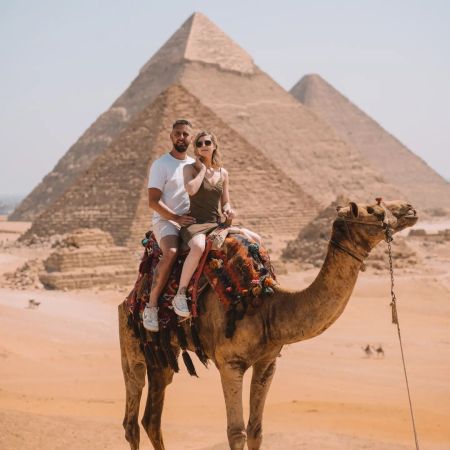
The history of ancient Egypt is not limited to the Pyramids of Giza and their vicinity, even though they are the main attractions for most Egypt tours. The country is dotted with incredible monuments that are still mostly untouched by the mainstream tourist flow.
Among these off-the-beaten-path sites are found the real histories of ancient Egypt and pharaohs, and at the same time the various architectural styles, religious beliefs, and royal customs are being demonstrated. They would be great options for those travelers who are looking for a deeper and more genuine experience to customize their Egypt travel packages.
1. Malkata Palace – Luxor
Malkata Palace, which was built by Pharaoh Amenhotep III, the most powerful among the Egyptian pharaohs of the 18th Dynasty, is located on the west bank of Luxor. Malkata Palace was one of the important centers of political power and ceremonials in ancient Egypt.
What makes it unique:
The royal complex once featured vast halls, beautifully designed gardens, and a large man-made lake. Although only partially ruined today, Malkata Palace remains an impressive example of royal architecture from the height of the Egyptian civilization. It is often overlooked in standard travel itineraries, yet it can be explored as part of a customized Luxor day tour, offering visitors a deeper look into the history of ancient Egypt beyond the famous temples.
2. The Lost City of Tanis – Nile Delta
Tanis, which was the capital and religious center during the 21st and 22nd Dynasties, even became a significant place in the history of ancient Egypt. The city was covered for centuries until modern archaeology brought to light its majesty.
What makes it unique:
The site of Tanis has gigantic stone figures, royal burials, and the ruins of temples connected to the mighty Egyptian pharaohs. Among the most mysterious and captivating ancient cities in Egypt, this site certainly deserves to be included in the itineraries, which are ideal for history-focused Egypt Vacation packages.

3. Temple of Seti I – Abydos
Abydos’ Temple of Seti I stands out as not only one of the best-preserved temples of the ancient Egyptian civilization but also the greatest religious architectural masterpiece of the country in its central period.
What makes it unique:
The edifice, which had Osiris, the god of the afterlife, as its primary deity, was the home of beautifully worked-out reliefs plus the famed list of kings from Abydos. This temple is living proof of the spiritual loftiness of ancient Egypt, portraying the steadfastness of gods that accompanied and guided the Egyptian civilization throughout its time of existence for thousands of years.
4. Babylon Fortress – Old Cairo
The Babylon Fortress is a strong and formidable symbol that prominently showcases the multiple layers of Egypt’s history, connecting the Roman period with the later Christian one. The fortress is not of pharaonic origin, but it is still an important relic for the study of the evolution of ancient Egypt’s history into the periods that followed.
What makes it unique:
The fortress once served as a refuge for early Coptic Christians and houses some of the oldest churches in Egypt that are still standing today. It reflects the continuity of Egyptian civilization through the ages and represents a cultural depth that many modern Egypt tours—focused mainly on pharaohs and temples—often overlook. Today, Babylon Fortress is a key stop on a well-planned Cairo day tour, offering visitors insight into Egypt’s rich religious and historical diversity beyond ancient temples.
5 – Statue of Meritamun in Akhmim
Akhmim, located in modern Sohag, is where the colossal statue of Princess Meritamun, daughter of Ramses II, was discovered.
What makes it unique:
Standing at over 11 meters, this limestone statue is one of the largest-scale female royal figures from ancient Egypt and offers a rare perspective into the position of royal women in the New Kingdom, thus being a truly magnificent hidden archaeological marvel.